Important Note
Information shared during sessions is educational in nature. It is not a substitute for advice from an Accredited Practising Dietitian, general practitioner, or other qualified health provider.
Our sessions explain portion sizing, food groups, and label reading in plain language you can apply on your next grocery trip. This is educational meal planning support — not clinical or medical advice.
Information shared during sessions is educational in nature. It is not a substitute for advice from an Accredited Practising Dietitian, general practitioner, or other qualified health provider.
All meal planning content on this page is general educational information. It is not medical advice, dietary therapy, or a substitute for care from an Accredited Practising Dietitian or other qualified health professional.
We discuss how to visually divide a plate into vegetables, proteins, and carbohydrates using publicly available Australian food guidance documents as general reading references — adapted to your preferences and budget.
Rather than counting calories, we teach simple hand-based portion guides and container sizing techniques that work in busy households without specialised equipment.
Learn to compare products using per-100g values, review ingredient lists, and distinguish marketing claims from standard food label information.
We review meal spacing ideas that suit different daily routines. Suggestions are tailored to shift workers, students, and families with varied schedules.
Eggs, tinned legumes, frozen fish fillets, and less expensive cuts of meat are common protein options for everyday meals. We compare cost per serving across typical Australian supermarket products and suggest preparation methods that maximise flavour without expensive marinades.
Many budget shoppers overlook affordable whole grain and vegetable options like oats, brown rice, and seasonal produce. We discuss simple ways to include these foods in familiar meals rather than relying on costly specialty products.
Swap one refined grain item per week, add a vegetable side to existing meals, and use frozen mixed vegetables when fresh prices spike.
Water remains the most economical beverage choice. We discuss how to reduce reliance on sugary drinks and explore low-cost alternatives like homemade infused water and plain tea without suggesting any beverage replaces professional hydration advice for specific health conditions.
Clients often complete a simple beverage audit tracking what they drink over three days to identify easy substitution opportunities.
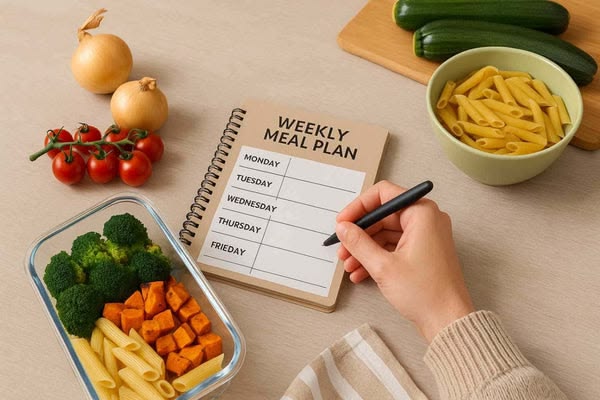
During consultations we provide printable meal planning grids designed for Australian paper sizes. These templates help you map proteins, vegetables, and grains across the week before you shop.
The approach emphasises flexibility — blank spaces for leftovers, notes for seasonal substitutions, and a column for estimated costs based on your preferred stores.
Request a Sample TemplateThis table offers general examples only. Actual prices vary by store, season, and location across Australia.
| Food Group | Budget-Friendly Options | Mid-Range Options |
|---|---|---|
| Vegetables | Frozen mixed veg, cabbage, carrots | Fresh broccoli, capsicum, salad mixes |
| Proteins | Tinned chickpeas, eggs, chicken drumsticks | Fresh fish fillets, lean mince |
| Grains | Rolled oats, white rice, pasta | Brown rice, wholegrain bread |
| Dairy Alternatives | Long-life milk, generic yoghurt | Greek yoghurt, cheese blocks |
A three-week email series covering staple ingredients, storage tips, and basic flavour combinations. Included with the Full Planning Package.
Quarterly updates on Victorian produce availability with suggested meal ideas and approximate price ranges from major retailers.
90-minute group session walking through real product labels from Australian supermarkets.
A four-week optional activity encouraging households to try one new budget recipe each week with shared progress notes.
Bring your favourite recipes to a session and we will suggest ingredient swaps and portion adjustments to align with your budget goals. This is general cooking guidance, not therapeutic meal prescription.